
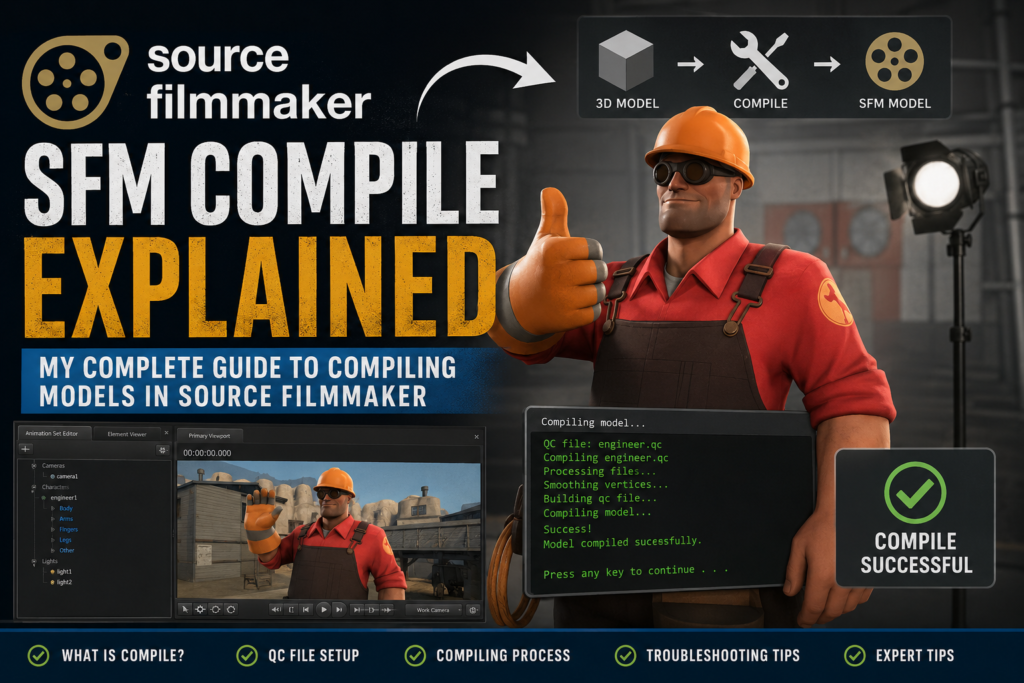
I still remember the first time I downloaded a custom model for Source Filmmaker. I was excited to use it in a project, but instead of seeing the character on my screen, I was greeted with confusing error messages. After searching through forums, watching tutorials, and making plenty of mistakes, I finally understood what SFM compile actually meant and why it mattered.
If you’re in the same position, don’t worry. I’ve been there too.
In this guide, I’ll explain SFM compile in simple language, share a few lessons I learned along the way, and help you understand the process without overwhelming technical jargon.
What Is SFM Compile?
Simply put, SFM compile is the process of converting your raw model files, animations, materials, or assets into formats that Source Filmmaker can actually use.
When creating or importing custom content, your files usually start in editable formats. These aren’t designed for SFM directly. Compiling transforms them into optimized game-ready files.
Think of it like baking a cake.
The ingredients are important, but you can’t serve flour, eggs, and sugar separately. You have to combine and bake them before they’re ready. Compiling works in a similar way for Source Filmmaker assets.
Related keywords you’ll often see include:
- Source Filmmaker
- SFM model compile
- SFM animation
- QC file
- Source engine tools
Understanding these terms makes learning much easier.
Why SFM Compile Matters
At first, I wondered if compiling was really necessary.
I quickly discovered the answer was yes.
Without compiling, Source Filmmaker cannot properly recognize many custom assets. Even if your model looks perfect in your editing software, SFM may refuse to load it.
Compiling helps ensure:
- Models load correctly
- Materials display properly
- Animations work as expected
- Physics behave correctly
- File sizes remain optimized
Skipping this step often results in broken models, invisible textures, or missing animations.
Files Commonly Used During SFM Compile
When I first explored the compile process, the number of file types felt intimidating. Thankfully, you don’t need to memorize every extension immediately.
Some common files include:
QC Files
A QC file acts like instructions for the compiler.
It tells Source tools where to find your model, materials, animations, and other settings.
SMD Files
These usually contain model geometry or animation data.
Many artists export SMD files from 3D software before compiling.
DMX Files
Some creators prefer using DMX because it supports additional information compared to traditional SMD files.
Texture Files
Textures give your model color and detail.
Without proper textures, your finished model may appear completely gray or purple.
My First SFM Compile Mistake
One mistake taught me an important lesson.
I spent nearly an hour checking my model because it refused to compile. I assumed something was wrong with the mesh itself.
Eventually I discovered I had simply typed the wrong folder path inside the QC file.
One tiny mistake caused the entire compile process to fail.
Since then, I always double-check folder locations before changing anything else. It saves an incredible amount of time.
Basic SFM Compile Workflow
Every creator develops their own workflow, but the general process usually looks something like this.
- Create or edit your model.
- Export the required files.
- Prepare textures and materials.
- Write or edit the QC file.
- Run the compiler.
- Test the compiled model inside Source Filmmaker.
- Fix any errors and repeat if necessary.
Rarely does everything work perfectly on the first attempt.
Even experienced creators usually compile several times before getting the final result.
Common SFM Compile Errors
Don’t panic if something goes wrong.
Most SFM compile issues are surprisingly common.
Missing Textures
Your model appears purple or shiny.
This usually means the material path is incorrect or texture files are missing.
Missing Model
Sometimes Source Filmmaker cannot locate the compiled model.
Checking your output folder is usually the first step.
Animation Problems
Animations may fail because of export settings or incorrect skeleton information.
This often requires checking your animation export again.
QC Errors
Even one missing character inside a QC file can stop the compile process.
Reading compiler logs carefully usually points toward the problem.
Personal Tip That Saved Me Hours
One habit completely changed my workflow.
Instead of making ten changes at once, I now change only one thing before compiling again.
If the compile succeeds, I know exactly what fixed the issue.
If it fails, I also know exactly what caused it.
This simple habit reduced my frustration more than any tutorial ever did.
Helpful Habits for Better Results
After compiling several projects, I developed a few routines that make everything easier.
Stay Organized
Keep folders clean.
Separate models, textures, materials, exports, and compiled files into their own directories.
Finding files becomes much easier later.
Name Files Clearly
Avoid random names like Final2_New_ReallyFinal.
Instead, use descriptive names that tell you exactly what each file contains.
Save Backups
Before editing important files, create a backup.
I’ve accidentally overwritten working files more than once, and backups saved me every time.
Tools Often Used with SFM Compile
Different creators use different software, but several tools frequently appear in SFM workflows.
These may include:
- Blender
- Crowbar
- Source SDK tools
- Source Filmmaker
- Image editing software for textures
Each tool handles a different part of the workflow.
You don’t necessarily need every tool immediately. Start with the basics and expand your toolkit as your projects become more advanced.
Troubleshooting Tips
If your compile isn’t working, try these steps before starting over.
- Read every error message carefully.
- Verify folder locations.
- Check file names for spelling mistakes.
- Confirm texture paths.
- Review your QC file.
- Test with a simple model first.
- Compile again after each small change.
Many problems have surprisingly simple solutions.
What I Wish I Knew Earlier
Looking back, I realize I made the learning process harder than it needed to be.
I believed experienced creators never made mistakes.
The truth is they make mistakes all the time. The difference is they know how to read errors, stay patient, and troubleshoot methodically.
Once I accepted that compiling involves trial and error, learning became much more enjoyable.
Progress happened much faster because I stopped expecting perfection.
Is Learning SFM Compile Worth It?
Absolutely.
If you enjoy creating custom animations, modifying characters, or building unique scenes in Source Filmmaker, understanding SFM compile opens many creative possibilities.
Instead of relying only on existing assets, you’ll have the freedom to customize your projects exactly the way you imagine them.
Like any technical skill, it takes practice.
But each successful compile builds confidence, and before long, tasks that once seemed impossible become routine.
Final Thoughts on SFM Compile
Learning SFM compile can feel confusing in the beginning, especially when unfamiliar file types and error messages appear everywhere. I experienced the same frustration when I first started, but persistence paid off.
The biggest lesson I learned is to stay patient, work through one problem at a time, and avoid rushing the process. Every failed compile teaches you something valuable, and those lessons make future projects much easier.
If you’re just getting started, keep experimenting, don’t be afraid of mistakes, and celebrate the small victories along the way. Before you know it, compiling models and assets will become a normal part of your Source Filmmaker workflow.
Have you tried SFM compile before, or are you working on your first project? Share your experience or questions in the comments. I’d love to hear about your journey and help if I can.