
I still think it is easy to underestimate a skin problem when it starts with something that looks small. A little cut, scrape, insect bite, or irritated patch of skin does not always seem like something worth worrying about. But sometimes bacteria can get through that damaged skin and cause an infection called cellulitis.
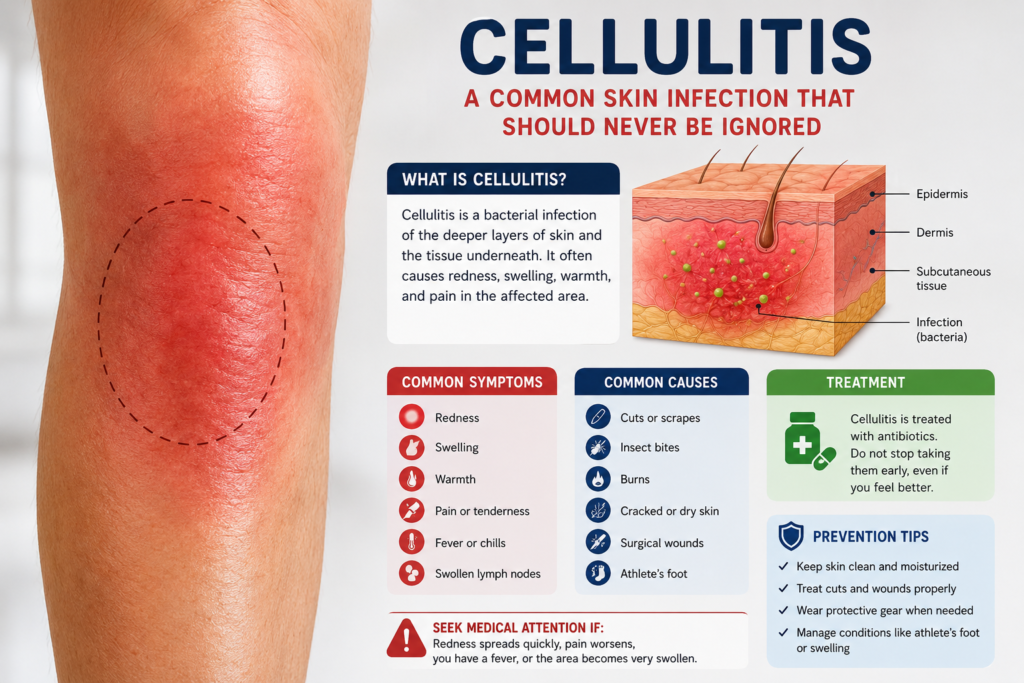
What makes cellulitis different from an ordinary skin irritation is that it can spread. The affected area may become red, warm, swollen, tender, and painful. In some cases, a person may also develop fever or chills. Because the infection can become serious if it is not treated promptly, knowing the warning signs is genuinely useful.
I like to think of this as one of those health topics where a little knowledge can make a big difference. You do not need to panic over every red mark on your skin, but you should know when it is time to stop watching and start getting medical advice.
What Is Cellulitis?
Cellulitis is a bacterial infection involving the deeper layers of the skin and the tissue underneath. It commonly develops when bacteria enter through a break in the skin.
That opening can be surprisingly small. A cut, scrape, puncture, surgical wound, burn, sore, or even skin affected by athlete’s foot can provide an entry point for bacteria. Common bacteria involved include streptococcus and staphylococcus.
Cellulitis can occur almost anywhere, although the lower legs are a particularly common location. It is also usually not something you catch from casual contact with another person.
One thing I always find helpful to remember is that cellulitis is an infection, not simply redness or irritation. That distinction matters because the appropriate treatment can be very different.
Recognizing the Signs of Cellulitis
The symptoms can develop fairly quickly, which is one reason I would not ignore a red area that seems to be getting larger.
Common symptoms include:
- Red or discolored skin
- Swelling
- Warmth around the affected area
- Tenderness or pain
- Skin that feels tight or uncomfortable
- Fever or chills
- Blisters in some cases
- Swollen lymph nodes
- Skin that looks dimpled or unusually shiny
Cellulitis often affects one side of the body, particularly when it involves a leg. The infected area may feel noticeably warmer than the surrounding skin.
When Redness Deserves Attention
Not every red patch means cellulitis. Minor irritation can happen for many reasons.
What catches my attention is a combination of symptoms. If redness is spreading, the area is becoming increasingly painful and warm, or swelling is getting worse, it is worth contacting a healthcare professional.
A rapidly changing rash accompanied by fever requires urgent medical attention. Mayo Clinic recommends prompt evaluation because cellulitis can spread through the body if it is not treated.
How Does Cellulitis Happen?
The skin is an incredibly useful barrier. It protects everything underneath from the outside world. But when that barrier is damaged, bacteria can sometimes get inside.
Possible entry points include:
- Cuts and scrapes
- Insect or animal bites
- Puncture wounds
- Burns
- Surgical incisions
- Cracked or very dry skin
- Athlete’s foot
- Certain skin conditions
Some people have a higher risk of cellulitis because of factors such as chronic swelling, previous cellulitis, certain skin conditions, weakened immune function, or diabetes.
That does not mean someone without these risk factors cannot develop it. Healthy people can get cellulitis too.
How Cellulitis Is Treated
This is the part where I would avoid trying to solve the problem entirely with home remedies.
Because cellulitis is a bacterial infection, treatment commonly involves prescription antibiotics. The exact medicine depends on the individual situation, the location and severity of the infection, and other medical factors.
For less severe cases, antibiotics may be taken by mouth. More serious infections may require hospital treatment and antibiotics given through a vein.
One of my biggest practical tips here is simple: do not stop prescribed antibiotics just because the skin starts looking better. Follow the instructions given by your healthcare professional. Mayo Clinic notes that treatment courses are commonly several days long, although the exact duration depends on the situation.
Simple Steps That May Help With Discomfort
While receiving appropriate medical care, some measures may help with discomfort and swelling.
Depending on the affected area and your healthcare professional’s advice, these can include:
- Keeping the area clean
- Elevating the affected limb
- Using a cool, damp cloth for comfort
- Taking recommended over-the-counter pain relief
- Following wound-care instructions carefully
If you have questions about compression wraps or stockings, ask your healthcare professional before using them.
My Practical Tips for Protecting Your Skin
If there is one lesson I would take from cellulitis, it is that basic skin care is more important than it sounds.
Tip 1: Take Small Wounds Seriously
You do not need to become obsessed with every tiny scratch. But cleaning minor wounds properly is a sensible habit.
Wash a minor wound gently with soap and water, keep it protected when necessary, and watch for increasing redness, pain, swelling, or drainage.
Tip 2: Pay Attention to Dry, Cracked Skin
I think people often overlook how useful healthy skin can be as a protective barrier.
Keeping skin moisturized can help reduce cracking. If your feet are prone to dryness or fungal infections, taking care of those problems is also important because damaged skin can provide bacteria with an opportunity to enter.
Another habit I would recommend is checking your feet regularly, particularly if you have diabetes or circulation problems. Finding a small injury early can make it easier to deal with before it becomes a bigger issue.
Can Cellulitis Come Back?
Unfortunately, having cellulitis once does not guarantee that you will never experience it again.
People who have repeated episodes may need to work with a healthcare professional to identify what is contributing to the recurrence. Things such as athlete’s foot, chronic swelling, skin problems, or repeated injuries may need attention.
For people with frequent recurrences, a healthcare professional may sometimes consider preventive antibiotic treatment. That is not something to start on your own, though. It requires individual medical advice.
What Happens If Cellulitis Is Ignored?
This is where I think the subject deserves some seriousness.
Untreated cellulitis can spread beyond the original area and, in severe cases, can lead to serious complications such as bloodstream infection or sepsis. Rarely, infection can spread into deeper tissues and become a medical emergency.
That does not mean every case will become dangerous. Many cases respond well to appropriate antibiotic treatment. The important point is recognizing that cellulitis is not something to casually ignore when symptoms are progressing.
Seek urgent medical care if you have rapidly spreading redness or swelling, especially when it is accompanied by fever or you feel significantly unwell.
A Few Common Questions About Cellulitis
Is cellulitis contagious?
Usually, no. Cellulitis itself is generally not spread from person to person through ordinary contact. It usually develops when bacteria enter through damaged skin.
Can cellulitis go away without antibiotics?
Because cellulitis is a bacterial infection that can spread, it should be evaluated by a healthcare professional rather than relying on home treatment alone. Antibiotics are commonly used for treatment.
Can cellulitis happen after an insect bite?
Yes. Bites can damage the skin and create an opening through which bacteria may enter.
Is cellulitis the same as an abscess?
No. They are different conditions, although they can occur together. An abscess is a collection of pus, while cellulitis is an infection of the skin and underlying tissue.
Final Thoughts on Cellulitis
Cellulitis is one of those conditions that can begin with something that looks almost insignificant. A tiny break in the skin can sometimes give bacteria an opportunity to cause a much bigger problem.
The main things I would remember are simple: watch for spreading redness, warmth, swelling, and pain; pay attention to fever or chills; take wounds and cracked skin seriously; and seek medical advice when symptoms are getting worse.
If you think you may have cellulitis, do not rely on an online article to diagnose yourself. A healthcare professional can examine the affected area and determine the appropriate treatment.
Taking a few minutes to care for your skin today may prevent a much bigger problem later. If this guide helped you understand cellulitis better, share it with someone who might find it useful, and feel free to explore more articles about skin health, wound care, and common infections.