
The first time I came across the term Chromtex, I honestly wasn’t sure what it meant. I assumed it was just another brand name floating around the textile industry. But after spending time learning about different fabric treatments, printing methods, and material technologies, I realized that Chromtex is often associated with improving how materials look, feel, and perform.
If you’ve also been wondering what Chromtex is and why people are talking about it, you’re in the right place. In this guide, I’ll explain everything I’ve learned in simple language without the technical jargon.
Whether you’re involved in textiles, printing, manufacturing, or you’re simply curious, this article will help you understand why Chromtex has become an interesting topic in today’s material industry.
What Is Chromtex?
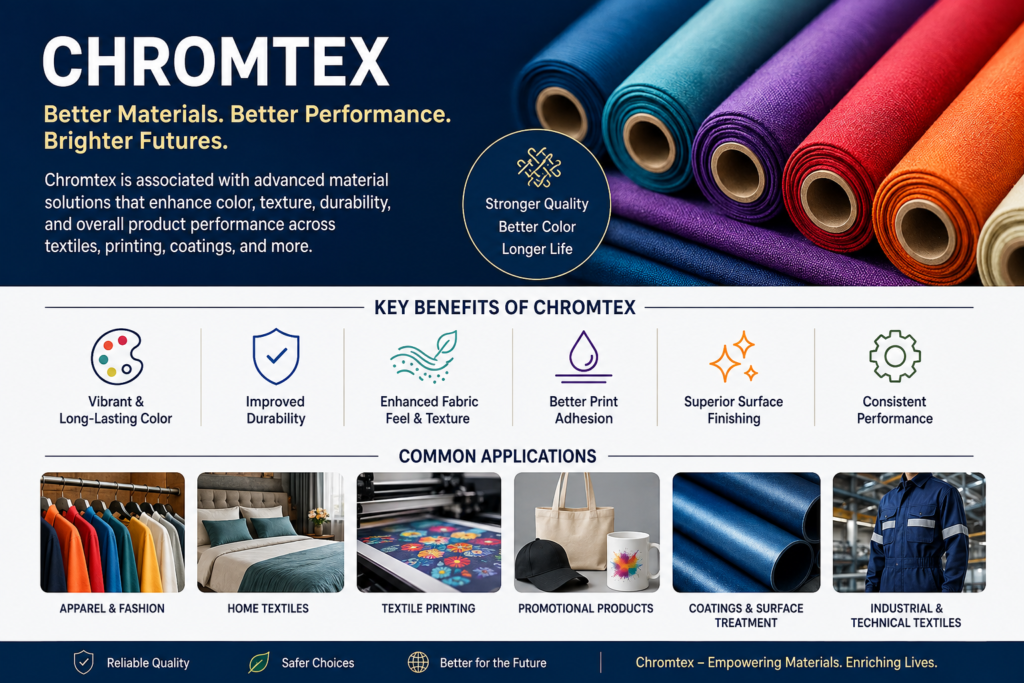
From what I’ve learned, Chromtex is commonly associated with technologies, treatments, or material solutions that improve the quality of fabrics and other surfaces. Depending on where you see the term, it may relate to textile finishing, color enhancement, printing applications, protective coatings, or specialty manufacturing processes.
Rather than describing one specific product, Chromtex is often connected with the broader goal of making materials more durable, visually appealing, and practical for everyday use.
That’s one reason why the meaning can vary slightly between industries.
Why Chromtex Is Becoming More Popular
Today’s buyers expect much more than attractive products.
People want fabrics that remain soft after multiple washes, printed designs that don’t fade quickly, and materials that continue looking new even after regular use.
That’s exactly where Chromtex-related solutions become valuable.
Some of the reasons businesses are paying attention include:
- Better color consistency
- Improved surface protection
- Longer-lasting materials
- Enhanced fabric texture
- Higher-quality finished products
- More reliable manufacturing results
In my opinion, consumers have become much smarter than they were a few years ago. Most people now care about quality just as much as price.
How Chromtex Supports Modern Textile Manufacturing
Textile production involves far more than weaving fabric together.
Before clothing reaches store shelves, the material usually passes through several stages, including preparation, dyeing, washing, finishing, and quality testing.
Each step influences how the final product performs.
Chromtex-related processes are often associated with helping manufacturers achieve:
- Richer colors
- Softer fabric feel
- Better durability
- Improved resistance to fading
- Cleaner finishing
I’ve noticed that even small improvements during finishing can completely change how premium a fabric feels.
Chromtex and Color Performance
Color is usually the first thing people notice.
A vibrant shirt, beautifully printed tote bag, or colorful home decoration immediately grabs attention.
Unfortunately, poor-quality coloring can quickly ruin that first impression.
Good color performance means:
- Even shades
- Strong color depth
- Better wash resistance
- Reduced fading
- Consistent appearance across production
When I compare high-quality fabrics with cheaper alternatives, the difference often becomes obvious after only a few washes.
That’s why proper color technology matters so much.
Chromtex in Printing Applications
Printing technology has improved dramatically over the past decade.
Whether it’s screen printing, textile printing, or promotional merchandise, customers expect sharp designs that stay attractive for a long time.
Chromtex-related solutions are often discussed alongside printing because successful printing depends on much more than good artwork.
Several factors influence the final result:
- Surface preparation
- Ink compatibility
- Proper curing
- Material quality
- Finishing techniques
When all these elements work together, printed designs appear cleaner, brighter, and more professional.
Surface Finishing Makes a Big Difference
One thing I didn’t fully appreciate until recently was how important surface finishing actually is.
Many products receive protective treatments after manufacturing to improve appearance and durability.
These finishes may help materials:
- Resist scratches
- Reduce wear
- Improve smoothness
- Enhance shine
- Increase moisture resistance
- Extend product life
Whether it’s fabric, coated materials, or decorative products, finishing often determines how premium something feels.
Common Benefits of Chromtex
Although applications vary, several advantages are frequently associated with Chromtex-based processes.
Better Appearance
Products often maintain richer colors and cleaner finishes.
Improved Durability
Materials can withstand everyday use more effectively.
Enhanced Texture
Many treatments help fabrics feel softer and smoother.
Reliable Performance
Manufacturers benefit from more consistent production quality.
Professional Results
Finished products often appear more refined and attractive.
Industries That Can Benefit from Chromtex
One reason Chromtex interests so many professionals is its flexibility.
It may have applications across numerous industries.
Some common examples include:
- Fashion and apparel
- Home textiles
- Textile printing
- Promotional products
- Industrial fabrics
- Upholstery
- Interior decoration
- Technical textiles
- Surface coating
- Specialty manufacturing
Each industry focuses on different performance goals, but they all share one objective—creating products that last longer and look better.
My Personal Tips When Evaluating Material Technologies
While researching different textile solutions, I’ve picked up a few habits that help me avoid misleading marketing claims.
Tip 1: Never Judge by the Name Alone
A professional-sounding name doesn’t automatically guarantee quality.
I always look for actual product information, testing data, and real-world performance instead of relying on branding.
Tip 2: Request Technical Information
Whenever possible, I like checking product specifications before making assumptions.
Knowing how something works is far more useful than reading vague promotional promises.
These two habits have saved me from making poor purchasing decisions more than once.
Things Businesses Should Consider
If a business is thinking about adopting Chromtex-related products or technologies, careful evaluation is important.
I recommend looking at several factors:
- Material compatibility
- Performance testing
- Color consistency
- Safety documentation
- Long-term durability
- Supplier reputation
- Production efficiency
Making decisions based on reliable information almost always produces better results than chasing marketing buzzwords.
Sustainability Matters More Than Ever
Environmental responsibility has become a major priority across manufacturing.
Many companies are searching for ways to reduce waste while maintaining product quality.
Longer-lasting materials naturally contribute to this goal because products don’t need replacing as frequently.
While sustainability depends on the specific product, I always appreciate manufacturers who provide clear information about responsible production and quality standards instead of making unsupported environmental claims.
The Future of Chromtex
As customer expectations continue growing, technologies that improve materials will likely become even more important.
People want clothing that stays colorful, home textiles that remain attractive, and printed products that continue looking professional over time.
I believe future innovation will focus on combining:
- Better durability
- Improved comfort
- Smarter manufacturing
- Enhanced color performance
- Cleaner production methods
If Chromtex continues evolving alongside these trends, it could remain an important part of modern material innovation.
Final Thoughts
After learning more about Chromtex, I’ve come to see it as more than just another industry term.
It’s commonly associated with improving materials through better finishing, stronger color performance, enhanced printing quality, and longer-lasting surfaces.
Of course, the exact meaning depends on the product or industry you’re looking at, so it’s always worth checking the details instead of making assumptions.
In the end, the smartest approach is simple: focus on proven performance, reliable suppliers, and genuine product quality. Those factors matter far more than any name alone.
If you’re researching modern textile technologies or comparing different material solutions, I hope this guide has made Chromtex much easier to understand.
Frequently Asked Questions
What is Chromtex?
Chromtex is generally associated with material improvement, textile finishing, printing technologies, color enhancement, and surface performance. Its exact meaning depends on the specific industry or product.
Is Chromtex only used in textiles?
No. While textiles are one of its most common applications, Chromtex may also relate to printing, coatings, decorative materials, and other surface treatment technologies.
Why is Chromtex important?
It is valued because it may contribute to better color quality, stronger durability, improved texture, and more consistent product performance.
Does Chromtex improve printing quality?
In many printing applications, Chromtex-related solutions may help achieve sharper designs, stronger color retention, and improved adhesion when used correctly.
Should buyers research Chromtex products?
Absolutely. I always recommend reviewing technical information, compatibility, performance data, and supplier credibility before choosing any product.