
A few years ago, I remember noticing a small patch of skin that looked unusually red and irritated. At first, it seemed like nothing worth worrying about. Maybe a minor scratch, an insect bite, or just skin irritation. That is exactly why cellulitis can catch people off guard.
When I first started learning about cellulitis, I was surprised by how easily a small break in the skin can give bacteria an opportunity to cause an infection. The redness, warmth, swelling, and tenderness can sometimes develop quickly, and ignoring those signs is not a good idea.
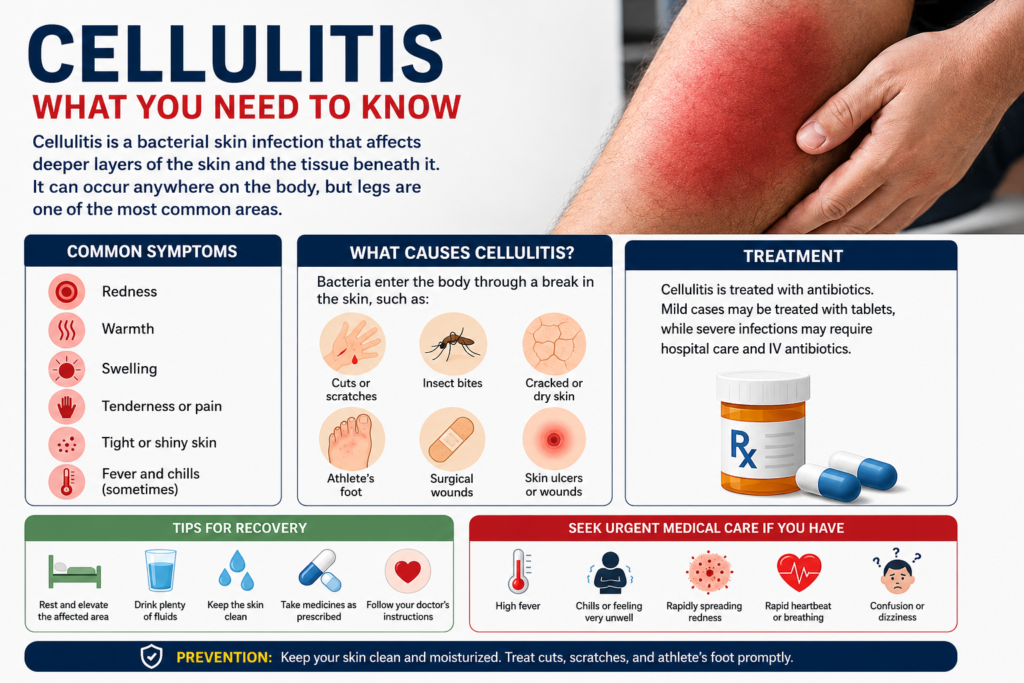
Cellulitis is a bacterial infection affecting deeper layers of the skin and the tissue underneath it. It can happen almost anywhere on the body, although the lower legs are a particularly common location. With prompt medical treatment, most people recover well, but untreated cellulitis can become much more serious.
So, let’s take a closer look at cellulitis, what it feels like, what causes it, and what you can do if you think you might have it.
What Is Cellulitis?
Cellulitis is a bacterial skin infection that develops when bacteria get through a break in the skin and infect deeper tissue.
The opening does not have to be dramatic. A cut, scrape, cracked skin, insect bite, wound, or even a tiny break that you never noticed can potentially allow bacteria to enter.
One thing I find especially important is that cellulitis is not always easy to identify just by looking at it. Several skin problems can cause redness or irritation, so it is better not to assume that every red patch is cellulitis.
A healthcare professional can examine the area and determine whether treatment is needed.
What Does Cellulitis Look and Feel Like?
The symptoms can vary from person to person, but there are several common signs.
The affected skin may become:
- Red or darker than the surrounding skin
- Warm or hot to the touch
- Swollen
- Tender or painful
- Tight or shiny
- Increasingly uncomfortable
Blisters can sometimes develop too. Some people also experience fever, chills, swollen glands, or a general feeling of being unwell.
One important detail is that redness may be less obvious on brown or black skin. In those cases, warmth, swelling, tenderness, and changes in the skin can be particularly useful clues.
Where Can Cellulitis Occur?
Cellulitis can affect different parts of the body.
The legs and feet are common locations, but infections can also occur on the hands, arms, torso, and other areas. Cellulitis around the face or eyes can be particularly concerning and needs prompt medical assessment.
What Causes Cellulitis?
The main cause is bacteria entering through damaged skin.
Our skin normally acts like a protective barrier. Once that barrier is broken, bacteria can get underneath the surface and multiply.
Common entry points can include:
- Cuts and scratches
- Cracked or dry skin
- Insect or animal bites
- Surgical wounds
- Skin ulcers
- Certain fungal infections such as athlete’s foot
Sometimes, however, there is no obvious wound. That can make cellulitis even more confusing because you may look at your skin and wonder how an infection started in the first place.
Who Is More Likely to Develop Cellulitis?
Anyone can develop cellulitis, including people who are otherwise healthy.
However, certain factors can increase the risk. These include previous cellulitis, chronic swelling such as lymphoedema, circulation problems, diabetes, reduced mobility, a weakened immune system, and ongoing skin problems.
This is one reason I think everyday skin care deserves more attention than it usually gets. We tend to think of small cracks, dry skin, and minor cuts as insignificant. Most of the time they are. Still, keeping the skin healthy helps maintain its protective barrier.
Cellulitis Treatment: What Usually Happens?
If a healthcare professional diagnoses cellulitis, antibiotics are commonly used to treat the bacterial infection. Mild cases may be treated with antibiotic tablets, while more severe infections may require hospital treatment and antibiotics given directly into a vein.
One mistake I would never recommend is stopping prescribed antibiotics simply because the skin starts looking better.
If antibiotics are prescribed, take them exactly as directed by your healthcare professional. Do not save leftover antibiotics for another illness or use someone else’s medication.
It is also worth knowing that symptoms do not always disappear immediately. In some cases, cellulitis can look worse during the first day or two of treatment before it begins improving. If you are not starting to feel better after a couple of days, or if symptoms are getting worse, contact your healthcare professional.
Things That May Help During Recovery
Alongside prescribed treatment, some simple measures may make recovery more comfortable.
For example:
- Rest the affected area when needed.
- Elevate an affected arm or leg to help reduce swelling.
- Drink enough fluids to avoid dehydration.
- Keep the affected skin clean.
- Take pain relief only when it is appropriate for you and according to medical or pharmacist advice.
- Follow your healthcare professional’s instructions carefully.
Elevating a swollen limb is one practical tip I would keep in mind. It is simple, costs nothing, and can make swelling more manageable while you are resting.
My second tip is to keep an eye on the affected area rather than checking it only once and forgetting about it. If the redness or swelling appears to be spreading, make a note of the change and contact a healthcare professional.
When Should You Get Urgent Help?
This is the part of cellulitis that I think everyone should understand.
Cellulitis can sometimes spread beyond the skin and cause serious complications. You should seek urgent medical attention if the infection is rapidly spreading or you become significantly unwell.
Emergency symptoms can include:
- Very high temperature
- Feeling extremely cold, shivery, or unwell
- Rapid breathing
- Very fast heartbeat
- Dizziness or fainting
- Confusion
- Cold, clammy, or unusually pale skin
- Purple patches on the skin
- Loss of consciousness
These symptoms can indicate a serious infection or complication and require emergency care.
I would also avoid waiting several days to see whether a painful, hot, swollen area simply disappears. Early assessment is important because appropriate treatment can help prevent cellulitis from becoming more serious.
Can Cellulitis Come Back?
Unfortunately, yes.
Having cellulitis once can increase the chance of developing it again. Recurring infections can also be associated with conditions such as lymphoedema, persistent swelling, skin problems, or fungal infections of the feet.
That does not mean you should live in fear of every scratch. Instead, focus on practical prevention.
Simple Ways to Protect Your Skin
A few everyday habits can make sense:
- Clean cuts and scratches with soap and water.
- Keep wounds protected while they heal.
- Moisturise dry skin to reduce cracking.
- Look after your feet and treat athlete’s foot promptly.
- Protect your skin when gardening or doing work that could cause cuts.
- Pay attention to persistent swelling.
- Manage health conditions that may increase your risk with guidance from your healthcare professional.
I especially like the idea of treating small skin problems early. A tiny cut may seem unimportant, but cleaning and protecting it takes very little time.
Cellulitis vs. Other Skin Problems
Not every red or swollen patch is cellulitis.
Skin irritation, allergic reactions, insect bites, abscesses, eczema, and other conditions can sometimes look similar. That is why trying to diagnose yourself from a photograph or online description can be unreliable.
An abscess, for example, may involve a collection of pus that sometimes needs to be drained by a healthcare professional. Cellulitis, meanwhile, is generally treated with antibiotics when diagnosed as a bacterial infection.
If you are unsure what is causing a rapidly changing, painful, hot, or swollen area of skin, getting professional medical advice is the safest approach.
Final Thoughts on Cellulitis
Cellulitis is one of those conditions that can begin with something incredibly ordinary, such as a small cut, cracked skin, or insect bite. That is what makes understanding it so useful.
The key things I would remember are simple: watch for unusual warmth, swelling, tenderness, and changes in the skin; seek medical advice when cellulitis is suspected; follow prescribed treatment carefully; and do not ignore symptoms that are rapidly getting worse.
Most people recover well with appropriate treatment, but cellulitis should not be treated as something to simply wait out.
If you have recently experienced cellulitis, what helped you during recovery? Share your experience or questions in the comments. Your story might help someone else recognize the warning signs and seek help sooner.