
A few years ago, I remember how quickly the digital world could change the way we worked. A process that once took an entire afternoon could suddenly be completed in minutes. New software appeared, businesses moved online, and even small brands started reaching customers around the world.
That experience taught me something important: staying comfortable with the old way of doing things is not always the safest option.
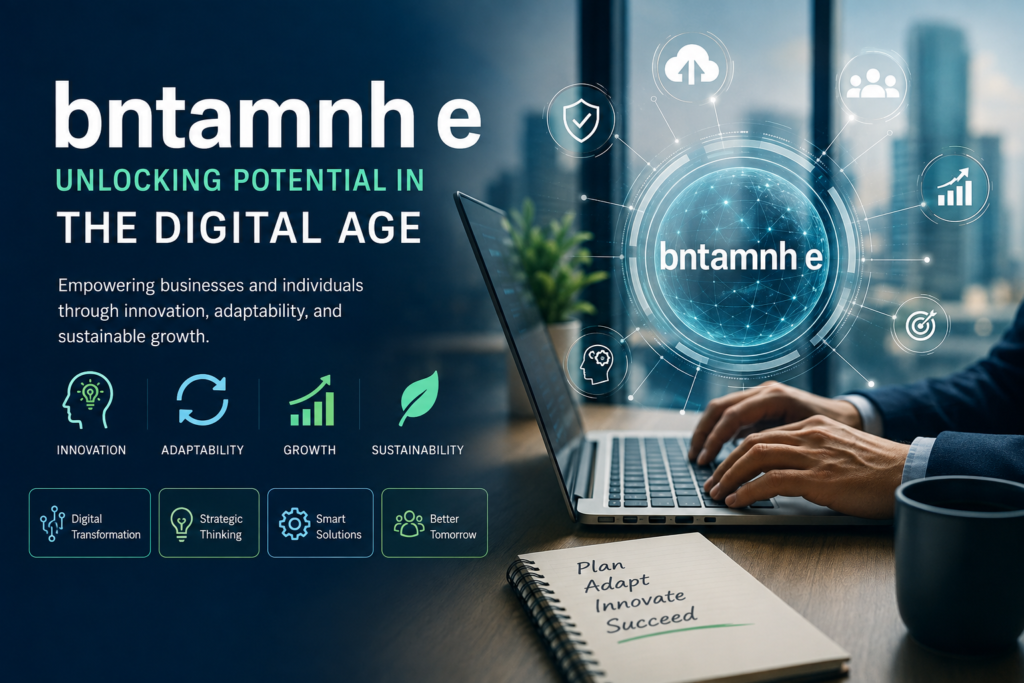
This is where bntamnh e becomes an interesting concept to explore. Although the term itself may still be unfamiliar to many people, the ideas associated with it connect closely with digital transformation, innovation, adaptability, sustainable growth, and smarter decision-making.
For me, the most interesting part is not simply the label. It is the thinking behind it. In a world where technology changes almost every day, individuals and organizations need practical ways to respond without losing sight of people, purpose, and long-term goals.
What Is bntamnh e?
The easiest way I understand bntamnh e is as a forward-looking approach to navigating the digital environment.
Rather than depending entirely on traditional methods, it encourages people and organizations to think about how technology, creativity, flexibility, and responsible decision-making can work together.
It is not necessarily about using the newest application or adopting every emerging trend. In fact, I think that approach can create more problems than solutions.
The real value comes from asking better questions:
- Can this process be made simpler?
- Can technology improve the experience?
- Are we preparing for future changes?
- Are we creating sustainable value?
- How can innovation benefit both businesses and people?
These questions make the concept much more practical.
Why bntamnh e Matters in a Changing Digital World
Digital transformation has changed expectations dramatically.
Customers want faster communication. Employees expect flexible working environments. Businesses need to respond quickly to market changes. At the same time, people are becoming more aware of privacy, transparency, sustainability, and ethical technology.
This creates a difficult balancing act.
A business cannot simply focus on speed while ignoring quality. Likewise, innovation means very little if it creates unnecessary complexity.
This is why the principles connected with bntamnh e can be useful. They encourage a balanced approach where organizations look beyond immediate results and consider how today’s decisions might affect tomorrow’s opportunities.
I have found that the most successful digital improvements are often not the flashy ones. Sometimes, replacing a confusing workflow with a simple automated process can make a bigger difference than introducing an expensive new system.
The Main Ideas Behind bntamnh e
Several important themes can be connected with this approach.
1. Adaptability
Change is unavoidable in the digital world.
A strategy that works perfectly today may need adjustment six months from now. Instead of treating change as a disruption, an adaptable organization sees it as something to prepare for.
Adaptability can involve learning new skills, reviewing processes, listening to customers, and being willing to experiment.
2. Digital Innovation
Innovation does not always mean inventing something completely new.
Sometimes it means finding a smarter way to use existing technology. Automation, artificial intelligence, cloud platforms, analytics, and digital communication tools can all help organizations improve productivity when used thoughtfully.
The important thing is to start with the problem rather than the technology.
3. Sustainable Growth
Fast growth can look impressive, but long-term stability is usually more valuable.
A sustainable approach considers resources, customers, employees, reputation, and future risks. Instead of asking only, “How quickly can we grow?” organizations should also ask, “Can we maintain this growth?”
That small change in perspective can lead to much better decisions.
4. Human-Centered Thinking
Technology should support people rather than make everyday experiences unnecessarily complicated.
Whether the setting is a company, school, online service, or personal brand, people remain at the center of the process.
A useful digital solution should save time, reduce frustration, improve access, or create a better experience.
How bntamnh e Can Influence Different Industries
One reason this concept is interesting is its flexibility.
Technology and Software
Technology companies constantly deal with changing customer expectations and emerging tools.
Applying bntamnh e principles can encourage developers and decision-makers to focus on scalable systems, user-friendly experiences, security, and continuous improvement.
The goal is not simply to build more technology. It is to build technology that solves meaningful problems.
Business and Entrepreneurship
For entrepreneurs, adaptability can be one of the biggest advantages.
Small companies may not have the resources of large corporations, but they can often respond faster. A business that listens carefully to customers and adjusts its strategy can discover opportunities that larger competitors overlook.
Digital marketing, online sales, customer analytics, and automation can also help smaller businesses operate more efficiently.
Education
Education is another area where digital innovation has created enormous possibilities.
Online courses, digital classrooms, interactive resources, and remote learning have made knowledge more accessible.
The important lesson is that technology should complement good teaching. Simply moving traditional material onto a screen does not automatically create a better learning experience.
Careers and Personal Branding
The same principles apply to individuals.
Today’s professionals are increasingly expected to keep learning. A degree or qualification may open a door, but continued development helps people remain useful in changing industries.
Building a professional presence through a portfolio, website, social platform, or industry community can also help communicate skills and experience.
My Practical Tips for Applying bntamnh e
If I were introducing these ideas to a business or individual for the first time, I would not recommend changing everything at once.
Start small.
Tip 1: Find One Problem First
One mistake people often make with digital transformation is buying tools before identifying the actual problem.
Instead, choose one process that wastes time or creates frustration.
Maybe customer inquiries are difficult to organize. Perhaps employees spend too much time entering information manually.
Solve that one problem first.
Once the improvement is visible, moving toward larger changes becomes much easier.
Tip 2: Learn Before You Automate
Automation is powerful, but automating a poor process can simply make a bad system operate faster.
I prefer reviewing the process first.
Write down the steps, remove anything unnecessary, and then consider which parts could benefit from technology.
This simple habit can prevent a lot of wasted time and money.
A Simple Framework to Get Started
For someone who wants to put these ideas into practice, I would suggest following five basic steps:
- Review your current situation. Identify weaknesses, delays, and unnecessary complexity.
- Choose one priority. Avoid trying to transform everything simultaneously.
- Explore suitable digital tools. Compare solutions based on actual needs rather than popularity.
- Test the change. Start with a small group or limited project whenever possible.
- Measure the results. Look at productivity, customer experience, cost, and overall effectiveness.
This approach makes digital innovation feel much less overwhelming.
Challenges to Keep in Mind
Of course, no strategy is perfect.
One challenge is resistance to change. Employees may be comfortable with familiar systems and hesitate to adopt something new.
Another issue is cost. Not every organization has the budget to experiment with expensive technologies.
There are also concerns around data protection, cybersecurity, training, and responsible use of artificial intelligence.
These challenges should not be ignored.
In my experience, good planning makes a significant difference. When people understand why a change is happening and how it will help them, they are generally much more willing to participate.
What Could the Future Look Like?
The digital economy is unlikely to slow down.
Artificial intelligence, automation, remote collaboration, data analytics, and emerging digital platforms will continue influencing how organizations operate.
This makes adaptability increasingly important.
The future of bntamnh e may therefore depend less on the term itself and more on how its underlying principles are applied. Organizations that combine innovation with responsibility will be better positioned to respond to changing expectations.
I also think individuals will have an increasingly important role. People who remain curious, continue learning, and are willing to experiment can create opportunities even when industries change around them.
Final Thoughts on bntamnh e
When I look at bntamnh e, I do not see it simply as another Discover bntamnh e and its ideas around digital innovation, adaptability, and sustainable growth. Explore practical tips and start improving today.
er digital buzzword. I see it as a useful way of thinking about change.
Its biggest lesson is relatively simple: progress should be intentional.
Technology can help businesses become faster and more efficient, but technology alone is not the answer. Real progress comes from combining digital tools with creativity, adaptability, human judgment, and responsible planning.
Whether you are running a business, developing your career, building a personal brand, or simply trying to work more efficiently, the principles associated with bntamnh e can provide a useful starting point.
The best time to prepare for digital change is before change forces you to do it.
So, start with one small improvement. Learn from the results, adjust your approach, and keep moving forward.
What is one digital process you would improve first? Share your thoughts or experience in the comments. Your idea might give someone else the inspiration they need to make their own digital journey a little easier.