
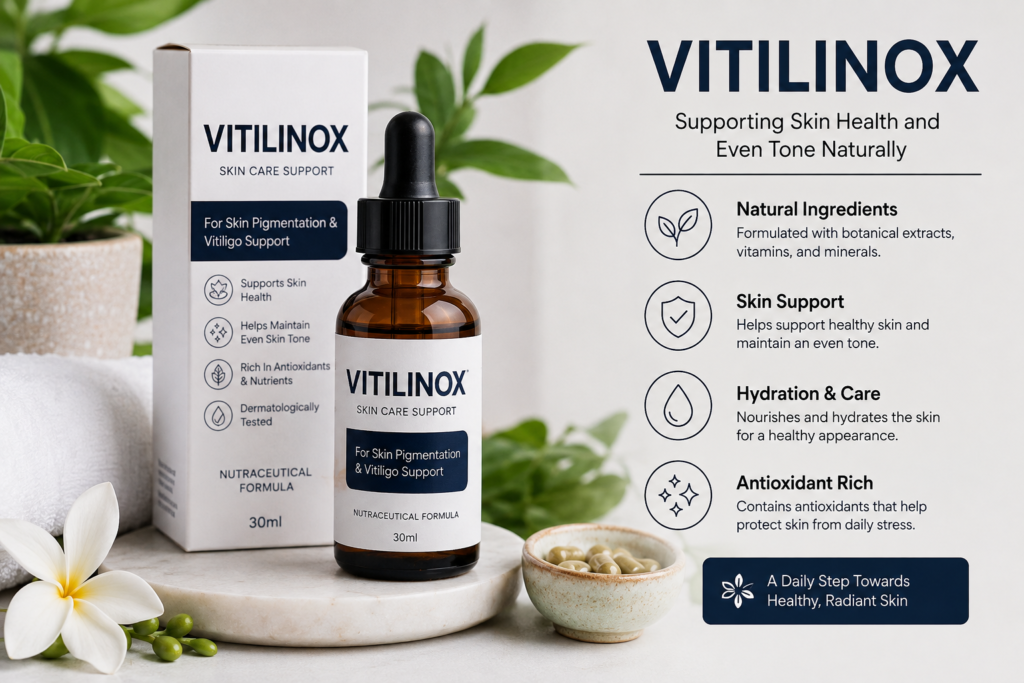
That raised an important question for me. What exactly is Vitilinox, and should someone looking for help with vitiligo take it seriously?
The more I explored the topic, the more I realized that a little context is important. Vitilinox is presented online as a skin support product associated with vitiligo care, but it should not be confused with an established medical cure for the condition.
So, in this guide, I want to explain Vitilinox in simple language and share what I think readers should know before making any decisions.
What Is Vitilinox?
Vitilinox is a name commonly associated with products and online discussions related to vitiligo and skin pigmentation. Depending on the source, it may be described as a topical skincare product, nutritional support formula, or broader complementary approach to caring for skin affected by pigmentation changes.
This is one reason the term can be confusing.
It is not a standard medical term like vitiligo, melanin, or melanocyte. Instead, Vitilinox appears to be used primarily as a product or brand-related name in the online skincare space.
For anyone researching it, I think the safest approach is to separate the product claims from what is actually established about vitiligo.
Understanding the Connection Between Vitilinox and Vitiligo
Vitiligo is a condition in which areas of skin lose their normal pigmentation. This happens when melanocytes, the cells responsible for producing melanin, are damaged or stop functioning.
The resulting patches can appear on different parts of the body. Hands, face, arms, legs, and areas around the eyes or mouth are among the places where people may notice changes.
One thing I think is worth emphasizing is that vitiligo is not caused by poor hygiene. It is also not contagious.
For many people, however, the visible changes can affect confidence. That emotional side is sometimes overlooked when people talk about skin conditions.
This is where products such as Vitilinox attract attention. People naturally want options that can become part of a daily skincare routine.
How Vitilinox Is Described Online
When I looked through information about Vitilinox, I found several recurring descriptions.
The product is generally discussed in connection with:
- Skin hydration
- Antioxidant support
- Pigmentation care
- Melanocyte support
- General skin wellness
Some online sources also describe formulations containing botanical extracts, vitamins, minerals, and other skin-supporting compounds. However, formulations can vary, so I would always check the actual product label rather than assuming every Vitilinox product contains the same ingredients.
That distinction matters.
A product’s individual ingredients may have research behind them, but that does not automatically mean the finished product has been proven to treat or cure vitiligo.
Vitilinox Is Not the Same as Medical Treatment
This is probably the most important point I would take away from my research.
Vitilinox should not be treated as a replacement for professional dermatological care. Available information describes it as a complementary or supportive product rather than an established pharmaceutical treatment for vitiligo.
If someone has newly developed white patches, getting a proper diagnosis should come first.
A dermatologist can determine whether the changes are actually caused by vitiligo or another skin condition. They can also discuss established treatment options based on the person’s situation.
What About Vitilinox Ingredients?
This is where I would be especially careful.
Some online descriptions mention ingredients such as botanical extracts, antioxidants, vitamins, and minerals. Certain Vitilinox-related sources mention ingredients including babchi, piperine, ginkgo biloba, vitamin B12, folic acid, vitamin D, hyaluronic acid, and copper-related compounds.
But there is an important difference between studying an ingredient and proving a complete commercial formula works.
I would not look at a long ingredient list and immediately assume that more ingredients mean better results.
Instead, I would ask:
- What exactly is in the product I am buying?
- Are the ingredient amounts clearly listed?
- Is the product intended for topical or oral use?
- Are there warnings or contraindications?
- Has the complete formulation been independently studied?
Those questions can save a lot of confusion.
My Personal Tips for Approaching Vitilinox
If I were researching Vitilinox for myself, I would keep things simple.
Tip 1: Do Not Expect Overnight Results
Skin pigmentation does not normally change overnight, and vitiligo management can require patience.
I have found that unrealistic expectations are one of the easiest ways to become disappointed with any skincare product.
Instead of expecting dramatic changes immediately, I would focus on consistent skincare and professional guidance.
Tip 2: Read the Label Carefully
This sounds obvious, but it is surprisingly easy to overlook.
Before using any new skincare product, I would check the complete ingredient list, directions, warnings, and recommended usage.
If I had sensitive skin or was already using prescription products, I would also speak with a healthcare professional before adding something new.
Potential Benefits People Look For
Why are people interested in Vitilinox in the first place?
The answer is fairly straightforward. People dealing with pigmentation changes often want a gentle addition to their daily routine.
Based on how the product is described online, people may be interested in Vitilinox for:
- Supporting everyday skin care
- Keeping affected areas moisturized
- Supporting overall skin wellness
- Adding antioxidant-focused care
- Taking a complementary approach to pigmentation concerns
These are reasonable goals, but they should not be confused with a guaranteed restoration of skin color.
What Vitilinox Cannot Promise
This is where I think honest information matters most.
Vitiligo is a complex condition, and there is no simple product that can guarantee permanent repigmentation for everyone.
Online marketing can sometimes make skincare products sound more powerful than the available evidence actually shows. I would therefore be cautious about claims suggesting that Vitilinox can completely cure vitiligo.
Medical sources and product-related information also make an important distinction between supportive skincare and proven medical treatment.
That does not mean every supportive product is useless. It simply means we should understand what it can realistically offer.
Safety and Things to Consider
Before trying Vitilinox or any new pigmentation product, I would pay attention to safety.
A few sensible precautions include:
- Read the product instructions carefully.
- Check the ingredient list for known allergens.
- Stop using it if significant irritation develops.
- Avoid applying products near the eyes unless specifically instructed.
- Ask a healthcare professional about possible interactions with existing treatments.
- Seek professional advice if you are pregnant, breastfeeding, treating a child, or managing another medical condition.
Some ingredients discussed in Vitilinox-related formulations may also require particular attention to sun exposure or skin sensitivity.
When it comes to skin, being cautious is rarely a bad idea.
Vitilinox vs Professional Vitiligo Care
I would think about Vitilinox as one possible part of a broader skincare routine rather than the entire solution.
Professional vitiligo care can include options such as prescription topical treatments and phototherapy. The appropriate approach depends on factors including the extent of pigmentation loss, location, age, and whether the condition is active.
That is why I would not choose a treatment simply because it is popular online.
A dermatologist can help identify the most appropriate approach for an individual case.
Questions I Would Ask Before Trying Vitilinox
If you are considering Vitilinox, here are a few questions worth asking:
Is Vitilinox a cure for vitiligo?
No. It should not be presented as a guaranteed cure. Available information describes it as a complementary skin or nutritional support product.
Can Vitilinox replace a dermatologist?
No. If you have unexplained pigment loss, professional evaluation is important.
Does everyone get the same results?
Not necessarily. Skin conditions can behave differently from person to person, and individual results from supportive products can vary.
Should I combine it with other treatments?
That depends on the specific product and your treatment plan. If you already use prescription medication, discussing the combination with a healthcare professional is the safer choice.
Final Thoughts on Vitilinox
After looking into Vitilinox, my biggest takeaway is that it is best approached with realistic expectations.
The name is increasingly associated online with vitiligo support and pigmentation-focused skincare. Some sources describe products containing botanical ingredients, vitamins, minerals, and other compounds intended to support skin health.
At the same time, supportive skincare is not the same thing as proven medical treatment.
If you are considering Vitilinox, take a few minutes to understand the exact product, check its ingredients, read the instructions, and speak with a dermatologist when appropriate.
Most importantly, remember that having vitiligo does not make your skin less beautiful or less healthy as a person. Products can be part of a routine, but confidence should never depend entirely on getting a particular cosmetic result.
Summary
Vitilinox is an emerging name associated with vitiligo and pigmentation support. It may appeal to people looking for a complementary skincare option, but it should not be considered a guaranteed cure or a substitute for professional treatment.
If you found this guide helpful, share it with someone who is researching Vitilinox or dealing with pigmentation concerns. And if you have personal experience with Vitilinox, feel free to share what you learned. Your experience could help someone else make a more informed decision.